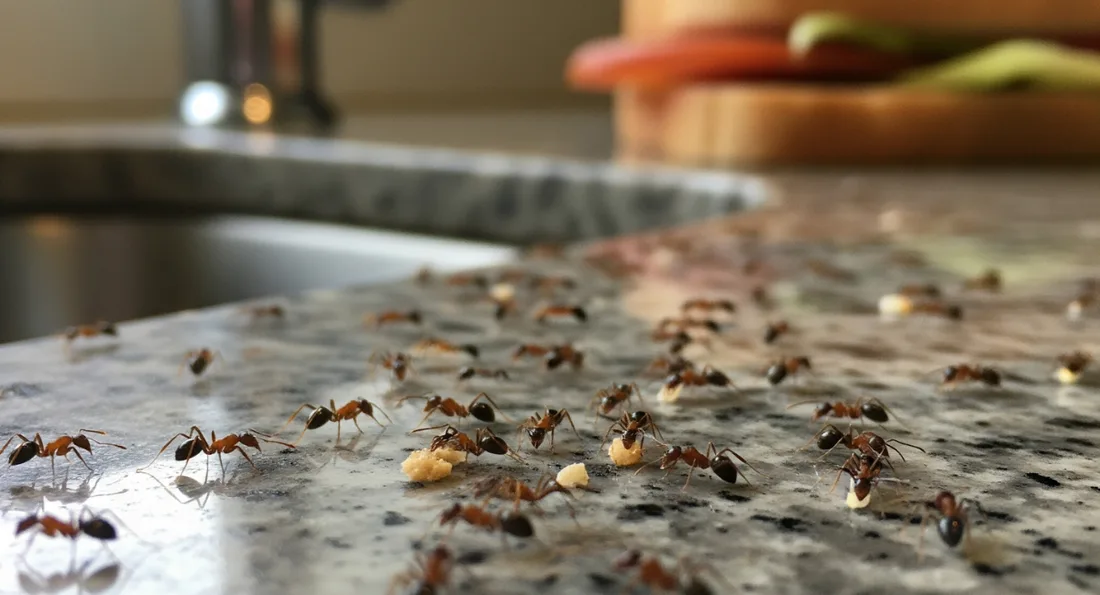
If you live in Paramount, you already know this ant. The trail along the kitchen counter disappears after you spray it, then shows up at the pet bowl two days later, then at the bathroom sink. That is not bad luck. It is exactly how Argentine ants are built, and understanding the colony explains both why DIY keeps failing and what finally works.
One Nest Is Never the Whole Problem
Most ant species have one nest and one queen. Argentine ants run networks of nests with many queens, connected across neighboring yards, and workers move freely between them. Scientists call it a supercolony, and in Southern California these networks can stretch for blocks. The ants in your kitchen are a tiny outpost of a population that lives under your whole street, which is why killing the ants you can see changes nothing for long.
Why Spraying the Trail Backfires
Store sprays are repellents. Ants detect the chemical, avoid it briefly, and the colony responds by budding: splitting into new trails and new nesting sites. That is why the problem seems to move from room to room after every spray. Worse, repellents can push ants deeper into wall voids, where they are harder to reach. You end up with more trails in more places, and a colony that has learned to route around your defenses.
What Actually Works
Professional Argentine ant control is a colony strategy, not a spray:
- Non-repellent treatments around the structure that ants cannot detect, so they walk through and carry it back to the nests
- Baits placed at active trails, which workers feed to the queens. Killing queens is what ends a trail permanently
- Moisture fixes: leaking irrigation and dripping hose bibs are ant water stations, and Paramount summers make them essential
- Vegetation gaps: shrubs and tree branches touching the house are ant highways that bypass any ground treatment
What You Can Do This Week
While you wait for treatment, or to keep a treated home clear: wipe trails with soapy water to erase the scent path, store pet food sealed and pick bowls up at night, fix the irrigation leak you have been ignoring, and trim plants a few inches off the walls. Skip the spray can. Every repellent application makes the colony harder, not easier, to eliminate.
When DIY Is Enough, and When It Is Not
A single trail after rain, gone within a day, is normal ant behavior and needs no treatment. Trails that return weekly, appear in multiple rooms, or pour out of outlets and baseboards mean the supercolony has your home on its map. That is a professional job, and in Paramount it usually starts with general service from $150. Call (888) 555-0199 and describe the pattern; we will tell you honestly which side of that line you are on.
Common Questions
Why do ants come inside after watering or rain?
Water floods their shallow nests and drives them up and in, and irrigation gives them the moisture to expand trails in dry weather. Both directions point to the same fix: moisture management plus colony treatment.
Are Argentine ants harmful?
They do not bite or damage wood, but they contaminate food, invade in huge numbers, and protect aphids that damage garden plants. They are a nuisance pest worth solving properly.
How long does professional treatment take to work?
Non-repellent and bait programs build over one to three weeks as the product moves through the colony. Trails shrink steadily rather than vanishing overnight, and that slower result is the one that lasts.