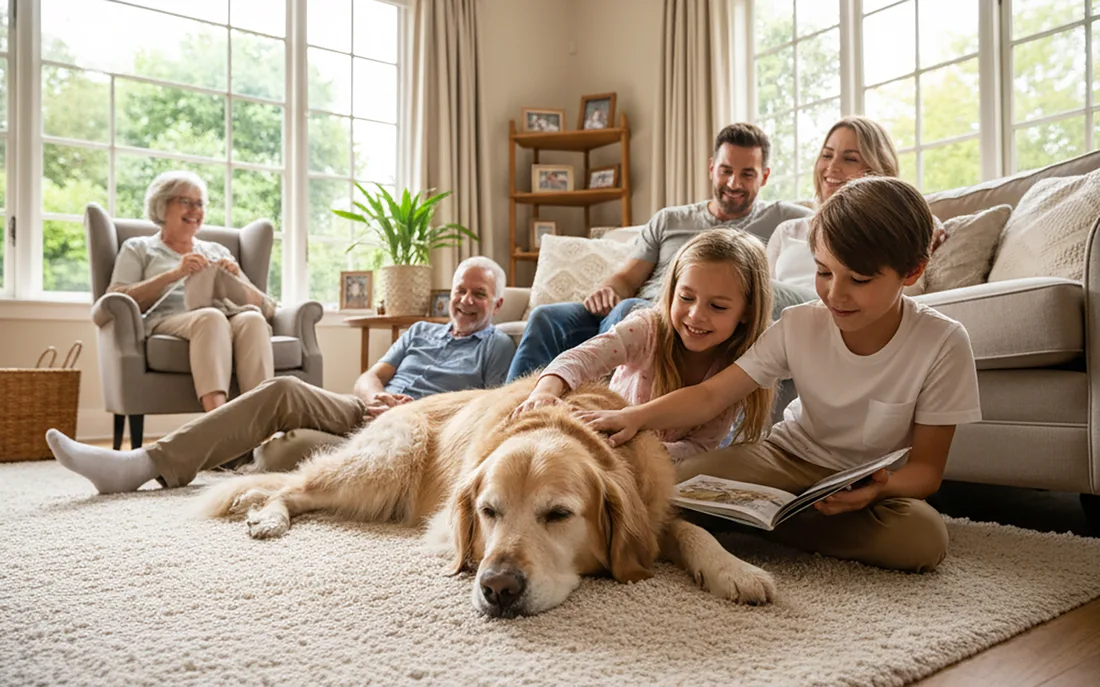
It is the first question most Paramount families ask us, and it deserves a straighter answer than it usually gets. No honest company calls any pesticide 100 percent safe. What a good company can do is show you exactly how exposure is minimized, product by product and room by room, so you can make an informed decision for your kids, your pets and your home.
What Pet Conscious Should Actually Mean
The phrase is meaningless unless it describes a method. For us it means Integrated Pest Management, the approach the University of California's statewide IPM program teaches: inspect and identify first, fix the conditions inviting the pest, use physical controls like sealing and trapping, and apply chemical products last, targeted and by the label. Most of our general service visits use far less product, in far fewer places, than the spray-everything approach most people picture.
How IPM Lowers Exposure
The practical differences you would notice on a visit:
- Gel baits for roaches and ants sit inside cracks and bait stations, where children and pets cannot reach them
- Exterior barrier treatments keep most product outside the living space entirely
- Liquids are applied to cracks, voids and perimeters, not broadcast across floors and counters
- Every product is applied strictly at its label rate, with the label's re-entry time given to you in writing
Product by Product: Where the Risk Sits
Risk depends on placement and drying, not just ingredients. A gel bait inside a cabinet hinge is effectively zero exposure. A liquid perimeter treatment is a keep-off-until-dry product, typically a few hours. Dusts go into wall voids where nothing living in the home contacts them. The genuinely careful cases are fish tanks, bird and reptile enclosures, and pets that lick floors; flag them on the call and the plan routes around them, with tanks covered and pumps off during service.
The Rules We Give Every Family
Before we leave, you will know exactly what was applied, where, and when each space is clear to use. The standing rules are simple:
- Keep kids and pets out of treated areas until surfaces are fully dry, or longer if the label says so
- Wipe food-prep surfaces before use after any kitchen treatment
- Store pet food and bowls away during service, and wash bowls before refilling
- Tell us about new pets, babies or health conditions at each visit so the plan stays current
Questions to Ask Any Company
Before you book anyone, ask: What products will you use, and where exactly? What is the re-entry time? What non-chemical steps come first? Can I see the label? A company that answers plainly is a company that works carefully. If you want those answers from us before booking, call (888) 555-0199 and ask to speak to a technician, not a salesperson.
Common Questions
Can my dog stay home during treatment?
For most exterior-focused services, pets can stay inside, away from treated areas, until everything dries. For interior treatments, plan on pets being out or confined to an untreated room for the re-entry window we give you.
What about my fish tank or bird?
Tell us in advance. Tanks get covered with pumps off during nearby application, and birds and reptiles are moved out of treatment rooms. These are routine precautions, not obstacles.
Are your products safe for a baby who crawls?
We plan crawling babies into the treatment design: bait placements out of reach, liquids only where they dry fully before re-entry, and clear timing guidance. Mention it on the call and we will walk you through the exact plan.